By Rita Agarwal, MD, FAAP, FASA
History is rarely made in a single, loud explosion. More often, it is forged quietly—one late night monitoring a critically ill patient under the glow of OR monitors, one courageous clinical breakthrough, and one mentor who decides that reaching the top means turning around to pull others up with them.
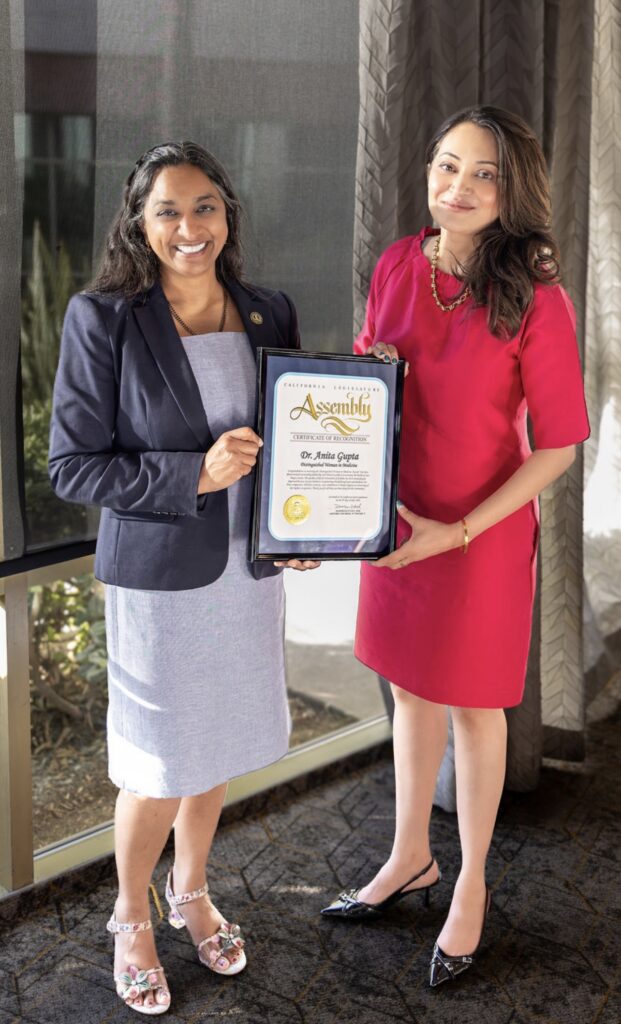
Recently, that exact spirit of purposeful leadership was recognized on a state level when California honored Dr. Anita Gupta, a professor of medicine at the UCR School of Medicine, with historic recognitions celebrating physician leadership, anesthesiology, and the advancement of women in medicine.
Presented by California Assemblymember Dr. Darshana Patel during the Women Physician Leadership Summit in San Diego, Dr. Gupta received the prestigious Distinguished Women in Medicine Award from the California Legislature, alongside an official proclamation designating February 3 as Women in Medicine Day.
It’s an incredible milestone. But beneath the plaques, the handshakes, and the state-level honors lies a deeper, more urgent “why” that matters to every single one of us: Why does celebrating women in medicine—and specifically trailblazers in high-stakes specialties like anesthesiology—radically change the future of health for all of us?
1. Because Representation in High-Stakes Specialties Matters
Anesthesiology is a discipline of absolute precision, crisis management, and calm under intense pressure. Yet despite years of equal or more women matriculating into medical schools, the percentage of women in anesthesiology still lags. Currently Approximately 26% of practicing anesthesiologists identify as women, and only 5-30% of leaders in anesthesiology (Department Chairs, Journal Editor in Chiefs, or Society Presidents) are women. However, there is an increasing pipeline of young, enthusiastic women entering anesthesiology residency programs ( 38% of the 2025 matriculating class), in part because of the pioneering work of women in anesthesiology.
Dr. Gupta’s in one such pioneer; an expert in anesthesiology, pain medicine, global health, health disparities and perioperative care, her leadership highlights a critical truth: diversity in procedural and critical-care specialties transforms clinical culture.
When women break barriers in fields traditionally dominated by men, they reshape the operating room and the ICU. They bring invaluable collaborative leadership, sharp operational insights, and multidisciplinary strategies to patient safety, redefining what a leader looks like when lives hang in the balance.
Diverse leadership teams ask different questions. They look closer at overlooked health disparities, champion personalized pain management innovation, and design healthcare systems that protect the most vulnerable patients during their most vulnerable moments. Diversity in medicine isn’t a box to check; it is a clinical necessity for safe, equitable care.
2. Because Mentorship is the Architecture of Progress
One of the most striking elements of Dr. Gupta’s response to her honor wasn’t just about personal achievement—it was about collective momentum:
“Mentorship is the cornerstone of progress in medicine; when we lift others up, we strengthen the entire profession. Leadership is not about reaching the top, but about widening the path for those who follow to ensure they have the tools and support to thrive.”
The road through medical school, intense residencies like anesthesiology, and pioneering research is grueling. By establishing foundational milestones—like linking a dedicated state day to the birthday of Dr. Elizabeth Blackwell, the first woman to earn a U.S. medical degree—we send an unmistakable message to every aspiring female physician and anesthesiology resident staring down a grueling call schedule: You belong here. Your perspective is vital.
True success isn’t solitary. It’s measured by how many doors stay unlocked behind us.
3. Because Innovating for Human Dignity Requires Heart
Dr. Gupta’s accolades—from this recent state legislative award to her extensive global work in drug safety, perioperative outcomes, public health strategy, and humanism in medicine—all point to a common thread: Empathy as a catalyst for innovation.
Pioneering breakthrough medical care requires a relentless commitment to human dignity. Whether managing complex pain care, innovating in drug safety, or navigating the front lines of patient safety in anesthesiology, it takes courage to challenge broken systems and advocate for patients. When we celebrate leaders who combine supreme clinical excellence in high-stress specialties with profound compassion, we redefine what a hero in medicine looks like.
Looking Ahead: Building a More Inclusive Tomorrow
The designation of Women in Medicine Day and the recognition of leaders at institutions like UC Riverside remind us that progress is active. It is driven by people who refuse to accept the status quo and choose instead to build a broader, more inclusive table—from the hospital boardroom to the operating suite.
As we look toward the future of healthcare, let’s take a page from Dr. Gupta’s playbook. Let’s celebrate the trailblazers, support the mentors, and fiercely protect a healthcare landscape where anyone with the passion to heal has the freedom to thrive.
Because when we lift women in medicine and anesthesiology, we elevate the safety and health of the world.